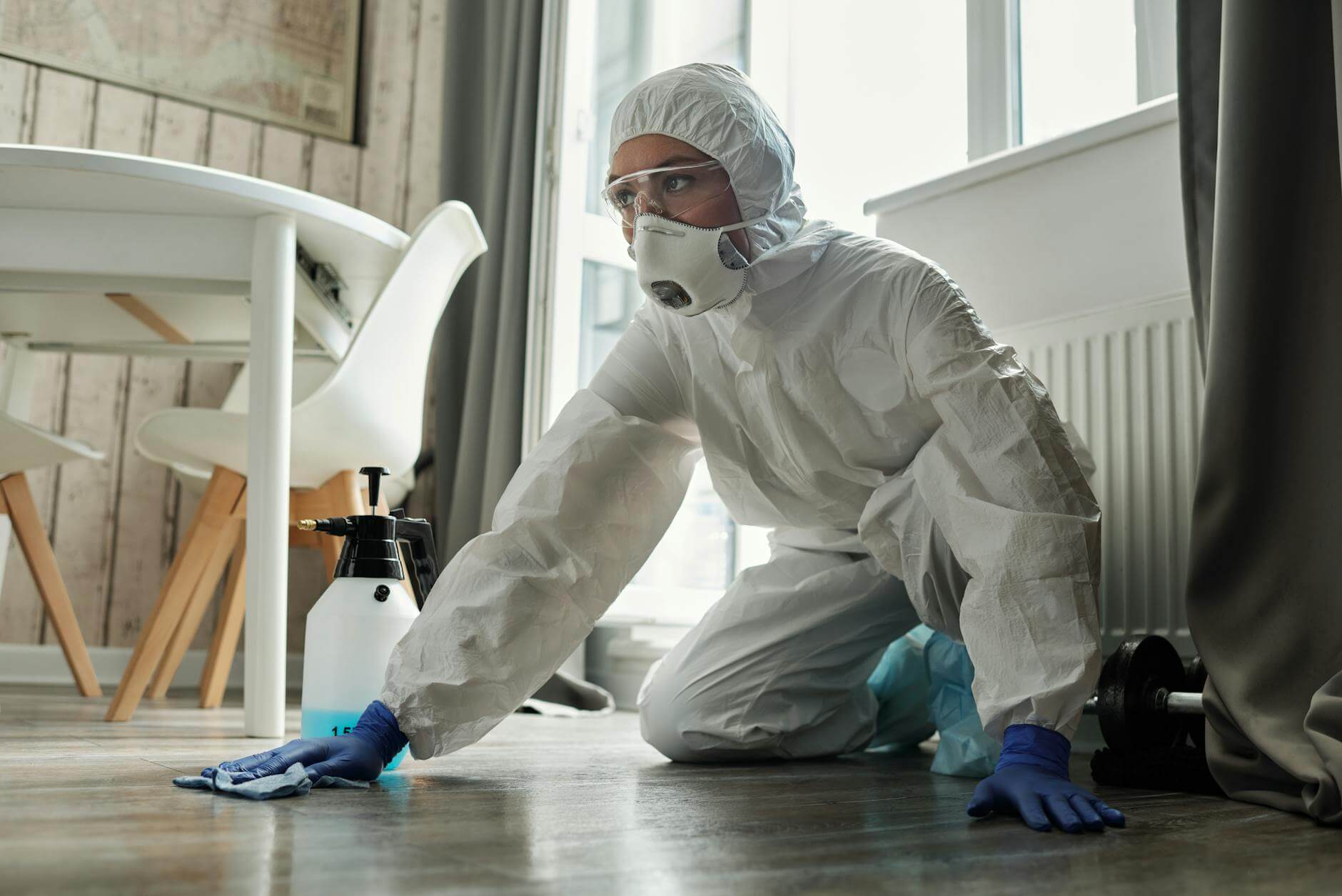
The hardest biohazard cleanup south jersey jobs are the ones nobody wants to talk about. A neighbor calls because mom has not answered the door in days. A landlord finally gets a key into a unit and finds what is behind the bedroom door. An animal control officer needs a property reset after a forty-cat removal in Camden County. The work that follows requires OSHA bloodborne pathogen training, the right PPE, NJDEP-compliant disposal, and a crew that can do the job without flinching, without commentary, and without making the family feel any worse than they already do. Compassionate, discreet, judgment-free response across Burlington, Camden, and the broader South Jersey region.
Discretion is not optional on these scenes. The walkthrough vehicle is unbranded. The work crew operates without external signage. We do not photograph for marketing, ever. The closeout package is yours, the records are destroyed at one year, and what happened in the home stays inside the project file.
What Biohazard Cleanup Actually Covers
“Biohazard” is a regulatory term, not a marketing one. In NJ, it specifically references material that may transmit infectious agents and is governed by NJDEP regulated medical waste rules and OSHA’s bloodborne pathogen standard (29 CFR 1910.1030). The categories we handle:
- Unattended death and decomposition cleanup. When a person dies and is not discovered for hours or days, the bodily fluids and decomposition byproducts saturate flooring, subflooring, drywall, and sometimes structural framing. Cleanup involves removing the affected material, decontaminating adjacent surfaces, neutralizing odor at the molecular level (not just masking it), and disposing of biohazard waste through licensed channels.
- Animal hoarding cleanup. Most commonly cats, but we have worked dog, rabbit, reptile, and bird hoarding scenes in NJ. Urine and feces saturate carpet, padding, subfloor, and often the joists below. Surface cleaning does not solve the problem. The contaminated material has to come out, and the structure has to be neutralized before reuse.
- Rodent and pest infestation aftermath. Live extermination is a separate scope handled by licensed pest control. After extermination, the carcass and droppings cleanup falls to us, including hantavirus-precaution protocols where applicable.
- Blood and bodily fluid scenes. Suicides, accidents, undiscovered medical events. Sensitive work with strict documentation requirements when insurance or estate claims are involved.
- Sewer backup and contaminated water. Black water (Category 3) cleanup including the structural drying and sanitization that has to happen before re-occupancy is safe. Note: we do not do sewer line repair, only the cleanup after.
- Drug residue. Methamphetamine and fentanyl residue cleanup in former NJ rental units requires specific protocols and post-cleanup testing. We coordinate with certified industrial hygienists for the testing phase.
Animal Hoarding Cleanup Specifics
Animal hoarding is the biohazard cleanup south jersey scenario we see most often. The Burlington County and Camden County animal control departments have referred or coordinated several cases with us. The pattern is consistent: the resident genuinely loves the animals, the situation has progressed past their ability to care for them, the home has reached a state where animal control intervenes, and what is left after the animals are removed is a property that is structurally compromised by months or years of urine and feces.
The cleanup work follows a specific sequence. First, removal of the animals (handled by animal control or rescue partners, not us). Second, removal of contaminated soft materials: carpet, padding, soft furniture, mattresses, bedding. Third, removal of contaminated flooring substrate where the urine has penetrated subfloor or joists. Fourth, decontamination of adjacent hard surfaces with hospital-grade disinfectant. Fifth, odor neutralization using ozone or hydroxyl generators (not perfumes or air fresheners, which mask but do not neutralize). Sixth, structural repair scope flagged for the property owner’s contractor.
NJDEP And OSHA Compliance
Biohazard waste in NJ is regulated medical waste under N.J.A.C. 7:26-3A. Disposal requires manifested transport to a licensed facility. We use NJ-licensed regulated medical waste haulers and we provide the manifest documentation as part of the project closeout package. OSHA’s bloodborne pathogen standard requires specific PPE, training, and exposure control plans for crews working biohazard scenes. Our cleanup partners maintain current certifications and the documentation is available on request.
Working With Coroners, Police, And Animal Control
Biohazard scenes often involve agencies that have to clear the property before cleanup can begin. We coordinate with the Burlington and Camden County medical examiner’s offices, local police departments, and animal control on access timing. For unattended death scenes, we typically begin work within 24 hours of the property being released by the coroner. For animal hoarding scenes, work begins after the last animal is removed and animal control has documented the property condition.
Insurance Claims And Estate Documentation
Many biohazard scenes are insurance claim events. Homeowner’s policies often have specific coverage for cleanup of certain scenarios (typically unattended death, sometimes vandalism-related contamination, occasionally storm-related water contamination). We provide insurance-grade documentation: itemized scope, cost breakdown, photo log at every stage, and disposal manifests. We do not bill insurance directly. The homeowner pays us and submits for reimbursement, which is the cleaner path on most policies.
Service Area
Biohazard cleanup south jersey across Burlington and Camden Counties primarily, with travel coverage for the rest of the eight-county South Jersey region: Atlantic, Cape May, Ocean, Gloucester, Salem, Cumberland. Severe scenes anywhere in NJ are workable on a case-by-case basis. The full coverage detail is on the about page.
Frequently Asked Questions
How fast can you respond to a biohazard scene?
For active biohazard situations (unattended death, animal control referrals, sewer contamination), we can typically be on site within 24 hours of the call once the property has been released by the relevant agency. Walkthroughs are same-day where possible.
Will biohazard cleanup remove the smell completely?
For most scenes, yes, after the contaminated material is removed and the structure is decontaminated and ozone-treated. For severe cases where bodily fluids have penetrated subfloor or framing, structural repair (replacement of the affected material) is required for full odor neutralization. Surface treatments alone will not work on heavy contamination.
Is biohazard cleanup covered by homeowners insurance?
Often yes, depending on the scenario and policy. Unattended death cleanup is covered under many policies. Animal hoarding cleanup is rarely covered (it is considered owner-caused). Sewer backup is covered if the policy has a sewer backup rider. We provide insurance-suitable documentation but we do not bill insurance directly.
Do you handle hoarding properties that also have biohazard?
Yes, this is the most common combined scope we handle. The biohazard remediation happens first (decontamination cannot happen with material still in place), then the standard hoarder cleanup process completes. See our process page for the integrated workflow.
What does biohazard cleanup cost in South Jersey?
Biohazard cleanup pricing varies more than any other scope we handle. Small scenes (single-room unattended death, contained animal urine cleanup) start around $2,500. Whole-home animal hoarding decontamination can reach $25,000 or more. The pricing page covers the major variables: hoarder cleanup cost south jersey.
Are your crews certified?
Yes. OSHA bloodborne pathogen training, NJDEP regulated medical waste handling, and IICRC water damage certifications where applicable. Documentation is available on request.